
If you’ve ever tried filming POV footage with a 360 camera while walking, you’ve probably realized pretty quickly that how you mount the camera matters just as much as the camera itself.
A backpack strap mount is one of the most natural positions you can use. It gives you a stable, over-the-shoulder perspective without the awkwardness of chest mounts or head straps, and it keeps your hands free. But there are a few very different ways to do it, and not all of them work equally well for 360 cameras.
After testing and regularly using two popular approaches, I want to break down what actually works best when mounting a 360 camera to your backpack, and more importantly, why.
Two mounting styles that actually make sense for 360 cameras
In practice, backpack POV setups tend to fall into two camps.
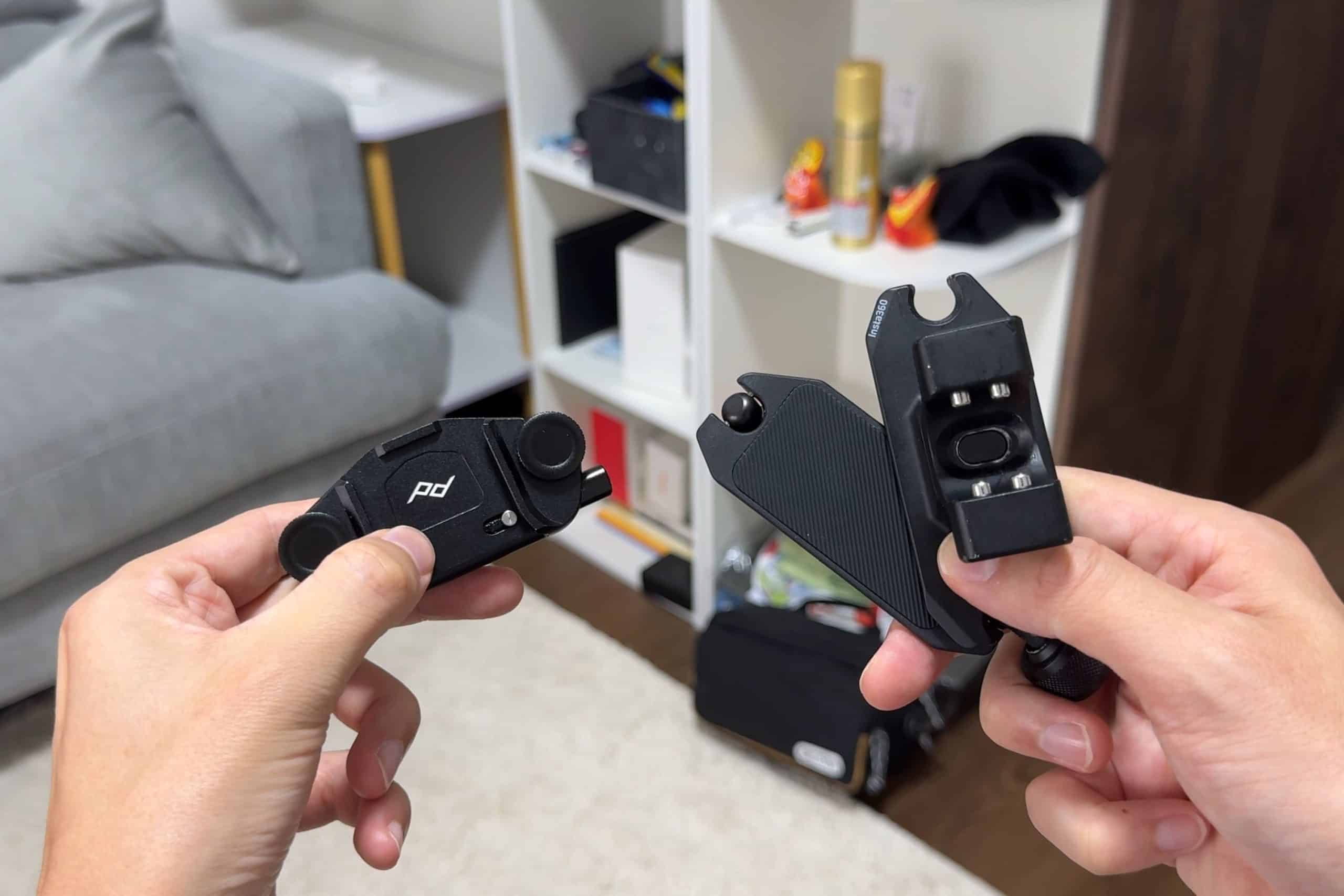
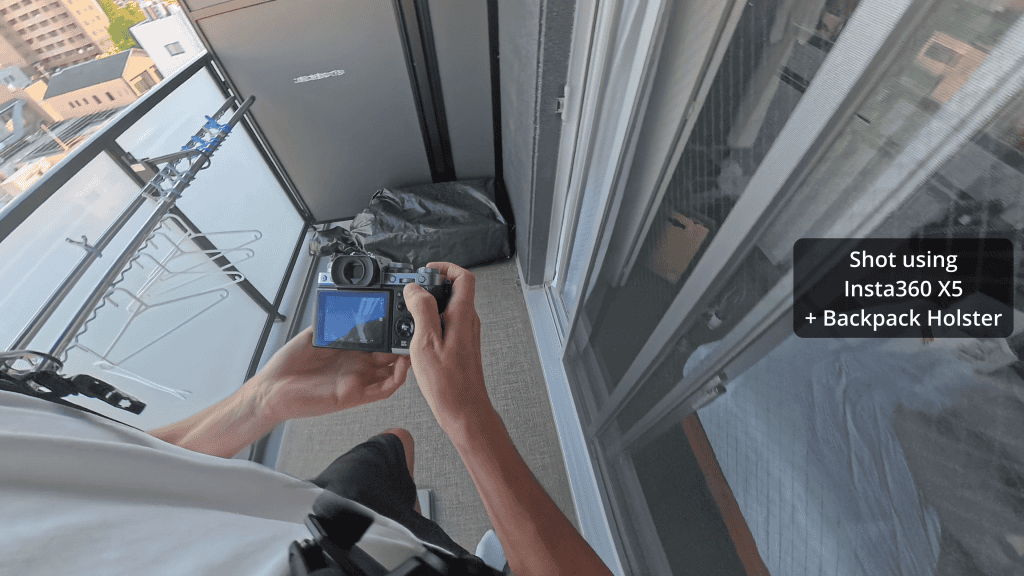
The first is a magnetic backpack holster, designed specifically for action cameras and 360 cameras that are mounted on a selfie stick. The idea is simple: your camera lives on a stick, the stick snaps magnetically into the holster, and when you want to shoot handheld, you twist and pull it out in one motion.
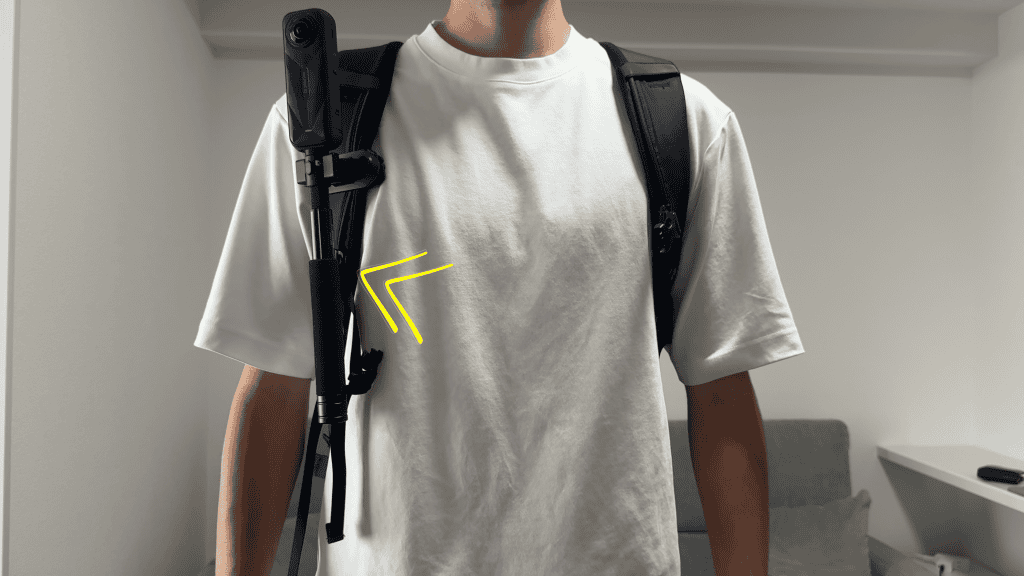
The second approach is a clip-style backpack mount, originally made for photographers. Instead of magnets, it uses a metal plate screwed into the bottom of the camera, which slides into a locking clip on your backpack strap.
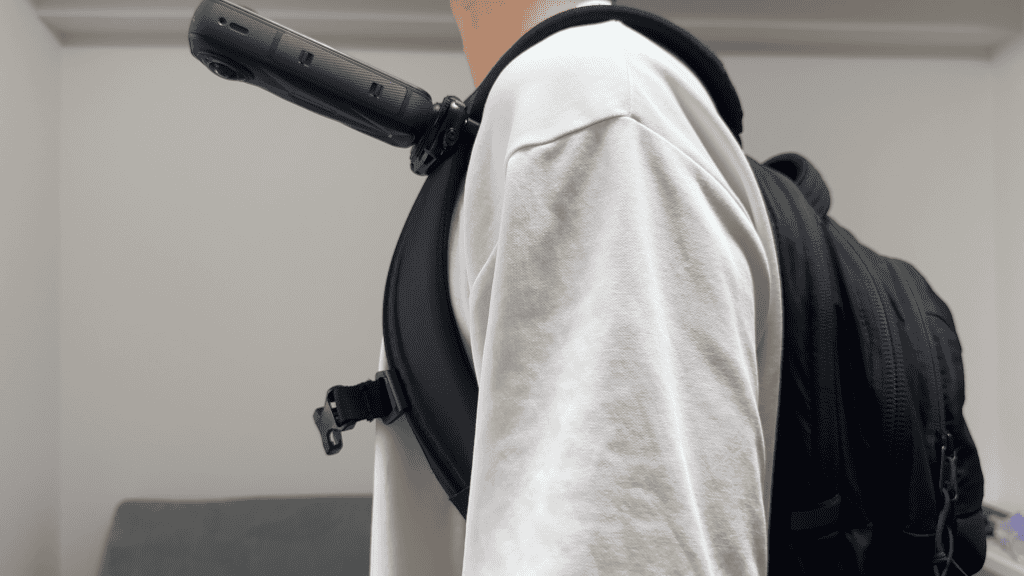
On the surface, both do the same thing. They put the camera on your shoulder and give you a POV angle. But the experience of actually using them is very different.
Day-to-day usability matters more than you think
Both mounts attach to your backpack strap, but even here there’s a small difference. On backpacks with thick straps, the clip-style mount tends to go on more easily. The magnetic holster can take a bit of force to clamp down properly, especially on bulkier hiking packs.
Once mounted, though, both systems are quick and reliable. The bigger difference shows up when you remove the camera.
With the magnetic holster, the camera comes out already attached to the selfie stick. That means you can immediately switch from POV filming to handheld shots without stopping or reconfiguring anything. For 360 cameras, that’s a big deal, because a selfie stick is how most people prefer to shoot with them anyway.
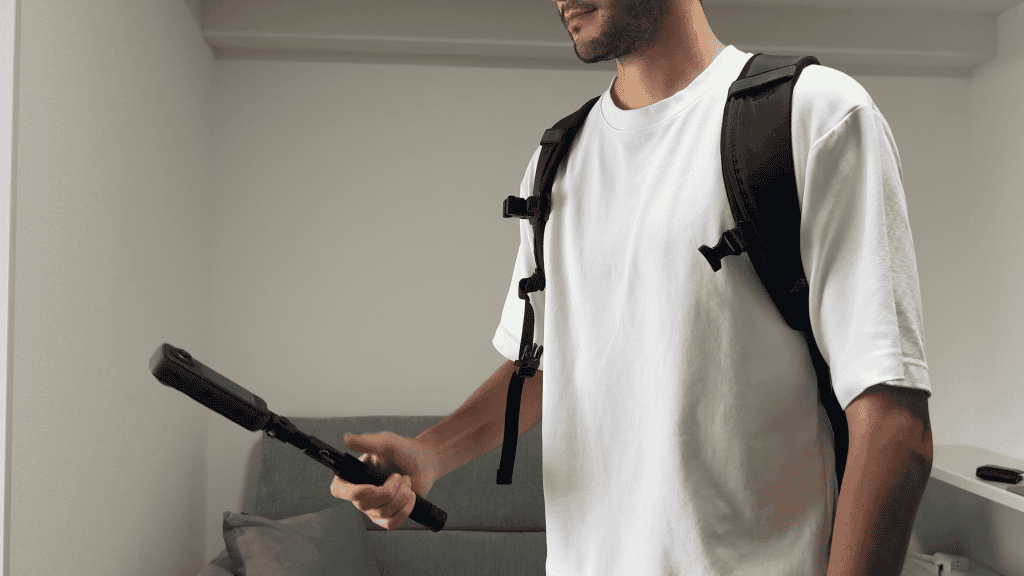
With a clip mount, you’re left holding just the camera with a metal plate attached. You can build a more complex setup around that, but it’s never quite as seamless as the magnetic holster approach.
If you like moving fast and switching shooting styles often, this alone might decide it for you.
Framing differences: subtle, but real
Even though both mounts sit on your backpack strap, they don’t place the camera in exactly the same position. That small difference affects framing, especially at wider angles.
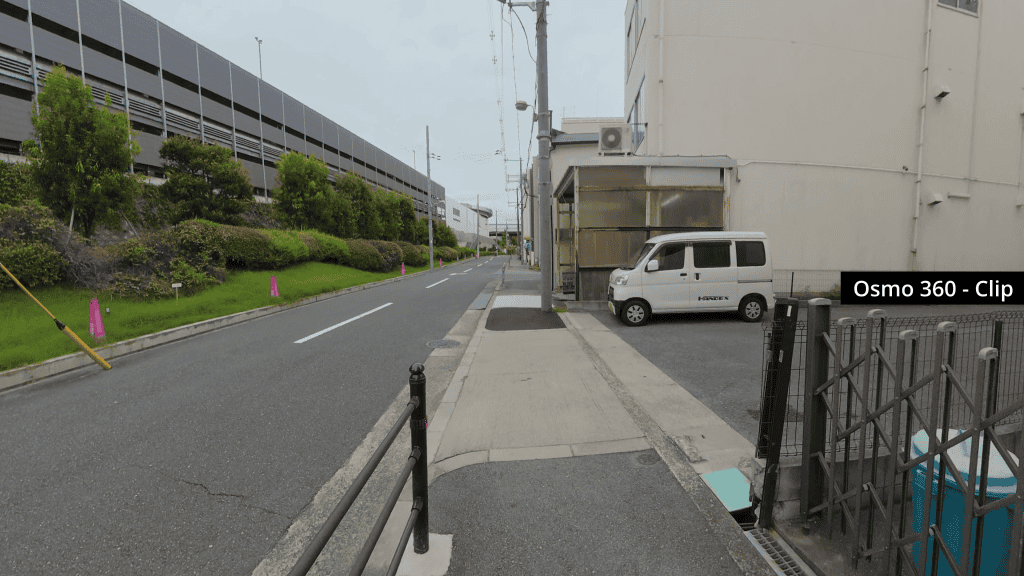
Depending on the camera and the mount, you may notice more or less of your head appearing in the shot. In some setups, the camera sits slightly farther away from your body, which helps keep your head out of frame. In others, it sits closer, which makes your head more visible but can feel more “natural” as a POV.
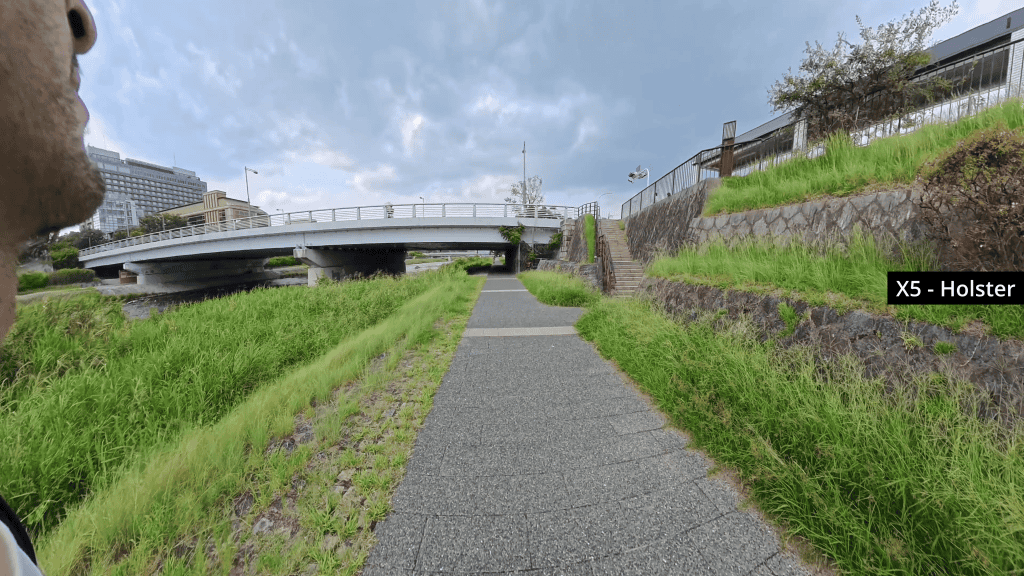
What matters most here isn’t which mount is “better,” but where you place it. Mounting higher or lower on the strap changes the look dramatically, and even your body shape and backpack design come into play. With clip-style mounts especially, small adjustments make a big difference.

One consistent thing I noticed is that the magnetic holster itself is more likely to appear in-frame if you tilt or pan downward. With clip mounts, the hardware stays much more hidden unless you deliberately point the camera at it.
Build quality and confidence while moving
If you’re thinking about durability, the clip-style mount clearly feels more rugged. It’s metal, mechanically locked, and designed to hold much heavier cameras than a 360 cam. There’s a long track record behind it, and it inspires confidence if you’re moving through crowds, hiking, or doing anything more demanding.
The magnetic holster works well, but it’s lighter-duty by comparison. There’s a bit more movement if you bump it, and long-term wear is harder to judge. For normal walking and travel filming, it’s perfectly fine—but if you want something bombproof, the clip mount has the edge.
Comfort and how “present” the mount feels
This is one area where the difference is immediately noticeable.
With the magnetic holster, you’re carrying the camera and the entire selfie stick on your shoulder at all times. It’s not uncomfortable, but it is noticeable. If you move your arms a lot or wear your backpack for long periods, you’ll be aware that something is hanging off your strap.
The clip-style mount is much lower profile. Only the camera sticks out, and the clip itself is slim enough that you can leave it on your backpack permanently and forget it’s there. If comfort and minimal bulk matter to you, this setup feels cleaner.
Flexibility beyond POV filming
Another thing worth considering is what else you want the mount to do.
The magnetic holster is very focused. It’s excellent for action cameras and 360 cameras on selfie sticks, and that’s pretty much its entire purpose.
The clip-style mount, on the other hand, fits into a broader camera ecosystem. If you already use tripods, plates, or other camera accessories, it’s easier to integrate into a larger kit. That flexibility doesn’t matter to everyone—but if your 360 camera is part of a wider setup rather than your only camera, it’s worth thinking about.
So… what’s actually the best way to mount a 360 camera to your backpack?
In terms of final footage, both approaches look surprisingly similar. The differences come down less to image quality and more to how you like to shoot.
If you regularly switch between POV shots and handheld filming, a magnetic backpack holster makes life easier. It’s fast, intuitive, and designed around the way most people actually use 360 cameras.
If you want a dedicated shoulder-mounted POV camera that stays out of the way, feels lighter, and inspires maximum confidence, a clip-style mount makes more sense.
There isn’t a single correct answer, but once you’re honest about your shooting style, the right choice becomes obvious.