
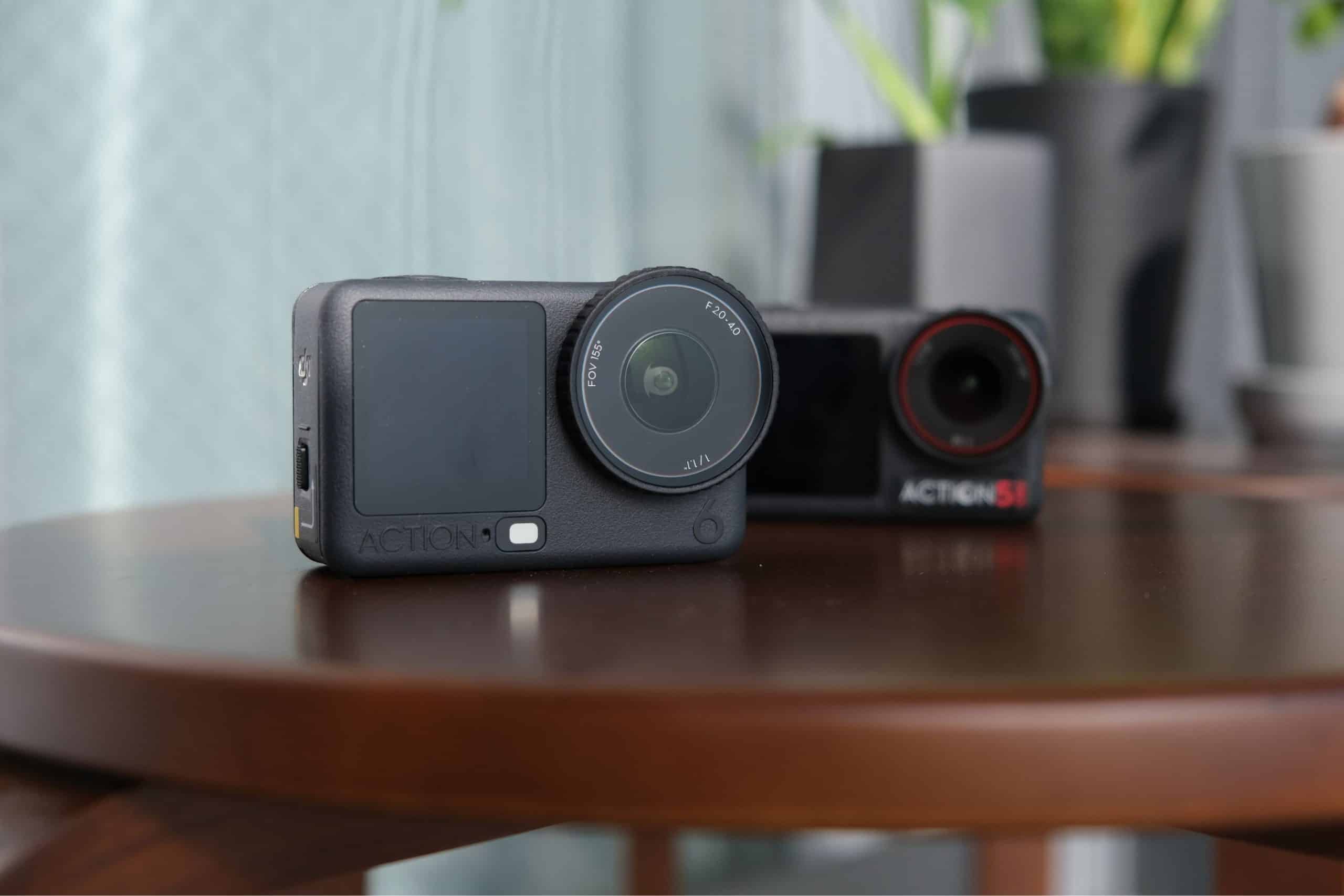
A few days ago, I walked into a camera shop and picked up the brand new DJI Osmo Action 6, literally the day after it launched.
Strangely enough, this might be the least excited I’ve ever felt buying a new camera.
When DJI first teased a variable aperture, something we’ve never seen on an action camera before, I was genuinely excited. It sounded like a real leap forward. But after watching the early reviews coming out of China, that excitement faded quickly.
The larger sensor came with a major caveat, the variable aperture felt more like a technical flex than a meaningful upgrade, and overall the Osmo Action 6 wasn’t shaping up to be the camera many of us were hoping for.
Still, I bought one anyway. Because specs and early impressions only tell part of the story.

After spending several days shooting with it, here’s the short version. The two headline upgrades, the new sensor and the variable aperture, are real, but far less impactful than the marketing makes them sound. If you’re new to action cameras, this is a solid entry point. If you’re already using an Action 4 or Action 5 Pro and waiting for a meaningful upgrade, you may want to hold onto your money for now.
That said, there are specific situations where the Osmo Action 6 genuinely performs better. This review breaks those down clearly so you can decide whether it actually fits your needs.
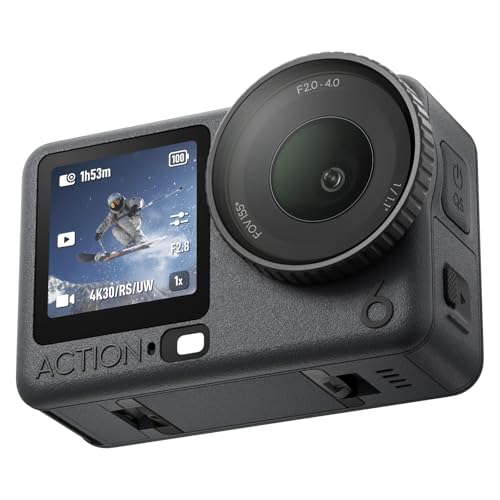
- Capture Every Scene, Day or Night - Variable aperture f/2.0 [1]–f...
- Detailed Action in Every Frame - The all-new 1/1.1″ square sensor boosts...
- Reliable Power in Any Weather - Shoot up to 4 hours in normal conditions...
- Pro-Level Sound Made Easy - Connects two DJI microphone transmitters...
The New Sensor
The biggest talking point with the Osmo Action 6 is its new sensor. DJI upgraded it from a 1/1.3 inch sensor in the Action 5 Pro to a larger 1/1.1 inch sensor. On paper, that sounds like a significant jump, especially since low-light performance is where action cameras usually struggle the most.
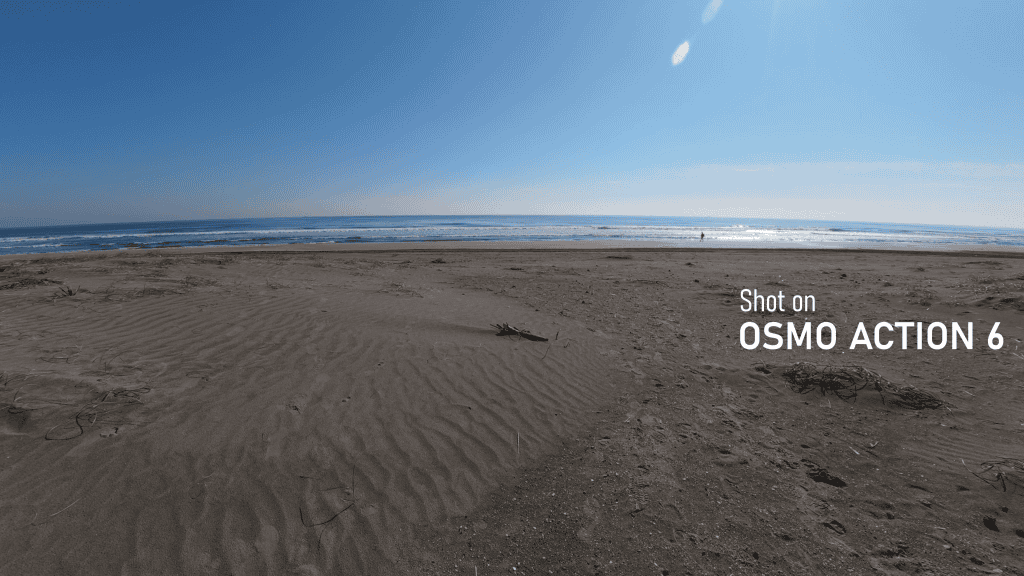
Naturally, most people assume this means better low-light video. Unfortunately, that isn’t what happens in real-world use.
The reason is simple. The new sensor is square, but most of us shoot in standard 16:9 widescreen. When you record video, you are only using a thin horizontal slice of that square sensor. Once you factor that in, the effective light-gathering area ends up being about the same as the Action 5 Pro, and depending on how you calculate it, even slightly smaller.
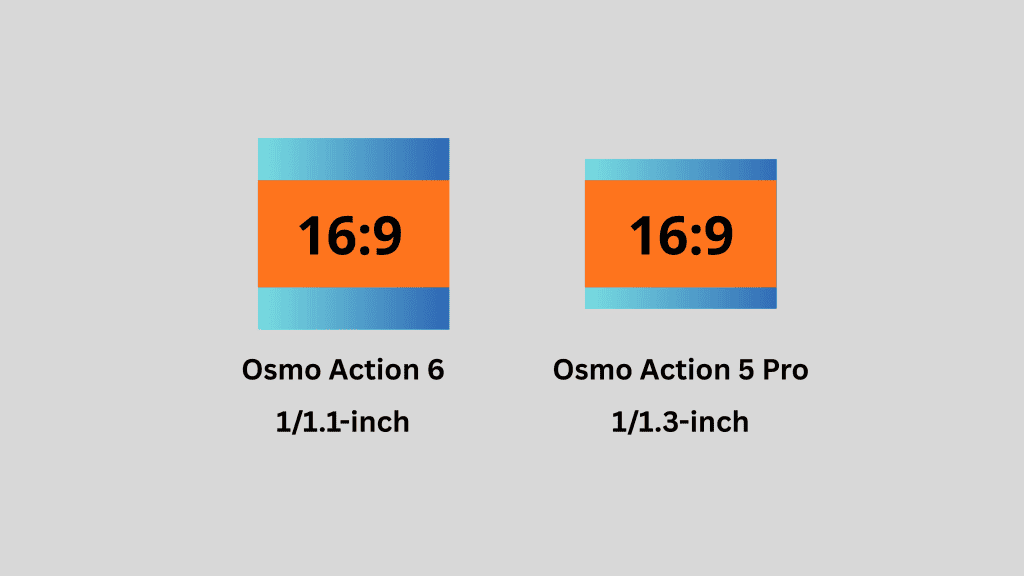
So while “1/1.1 inch sensor” sounds impressive on a spec sheet, it does not translate into better low-light performance for normal horizontal shooting. Later on, the variable aperture does far more for low light than the sensor size itself.
If the bigger sensor does not improve low light, what is it actually good for?
This is where the Osmo Action 6 delivers what I consider its most meaningful upgrade. You can now capture the full square sensor and reframe later as either horizontal or vertical video.
For creators who publish on both YouTube and platforms like TikTok or Instagram, this is huge. You can shoot once and repurpose the same clip for multiple platforms without sacrificing resolution or cropping away half the frame. GoPro has offered something similar with 8:7, and Insta360 has FreeFrame modes, but DJI’s square sensor gives you some of the best true sensor coverage for vertical video so far.
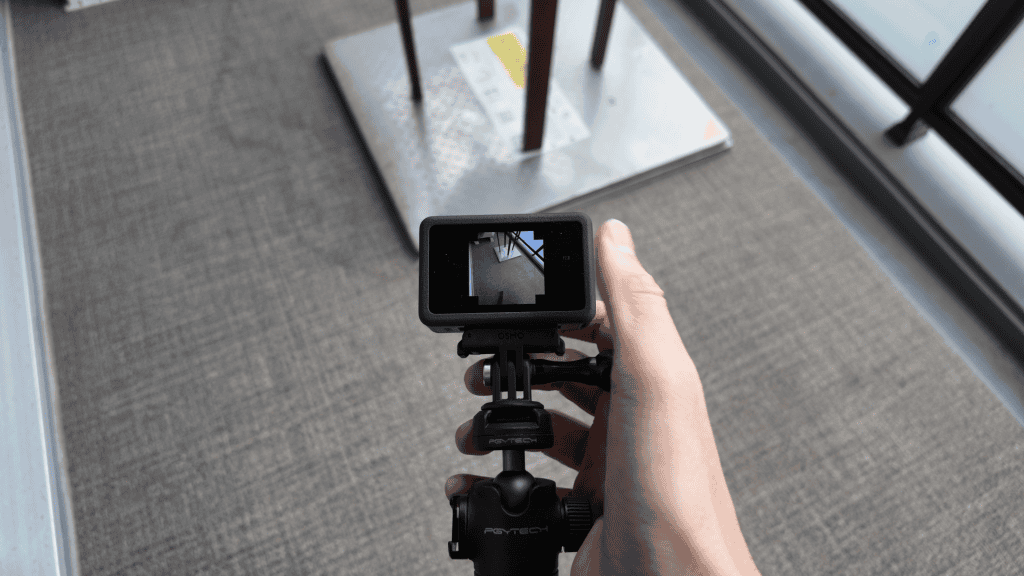
If you are a single-platform creator who only uploads landscape video, this feature is far less exciting. The files are larger, and you add an extra step in post-production because you have to manually reframe everything. It is powerful flexibility when you need it, and unnecessary work when you don’t.
There are also a few smaller benefits to the square sensor. It allows you to shoot horizontal video even when the camera is mounted vertically, and it gives electronic stabilization more room to work vertically. This is what finally enables full 4K HorizonSteady instead of being limited to 2.7K like on the previous model.
So while the new sensor does not deliver the low-light boost many people expected, it does expand what the camera can do in terms of flexibility and stabilization.
Variable Aperture
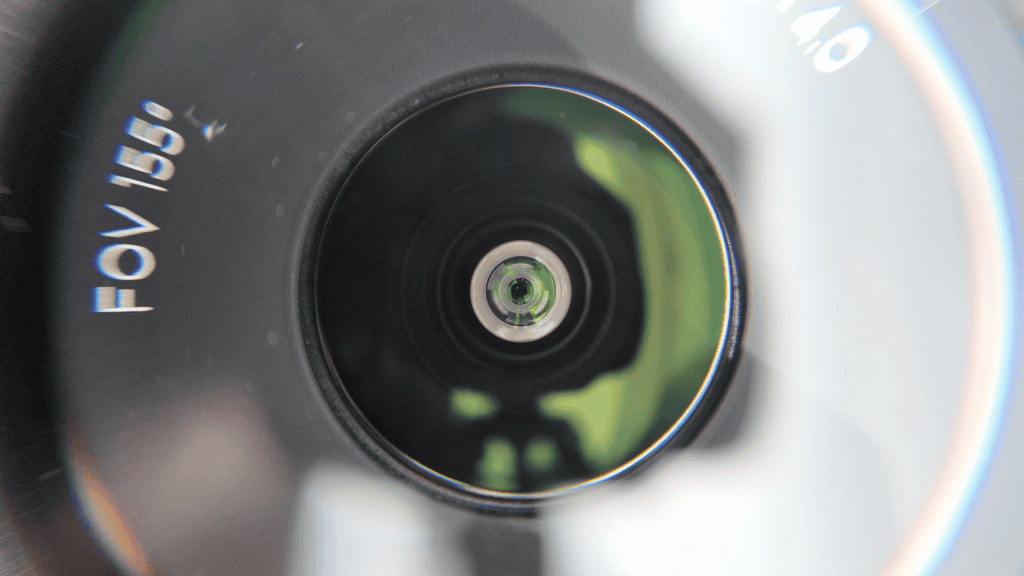
The most talked-about feature of the Osmo Action 6 is its variable aperture. This is the first action camera to offer it, and it represents a genuine technical first for the category.
A simple way to think about aperture is like the pupil of your eye. It opens wider in darker environments to let in more light and closes down in bright conditions to avoid overexposure.
When people hear “variable aperture,” three potential benefits usually come to mind. Better low-light performance, the possibility of depth of field or background blur, and more control over shutter speed and motion blur without constantly relying on ND filters.
Let’s look at how those actually play out.
Low-Light Performance
Low-light performance is improved, and after the reframing flexibility, this is the most noticeable upgrade on the Osmo Action 6.
The lens can open to f2, which lets in twice as much light as the fixed f2.8 aperture on the Osmo Action 5 Pro. Even though the effective sensor area is not larger for widescreen video, the extra light coming through the lens more than compensates for it.
This does not suddenly turn the Osmo Action 6 into a low-light monster. It still behaves like an action camera. Night footage still shows electronic stabilization jitters when walking, although they are slightly reduced because the camera can maintain higher shutter speeds.
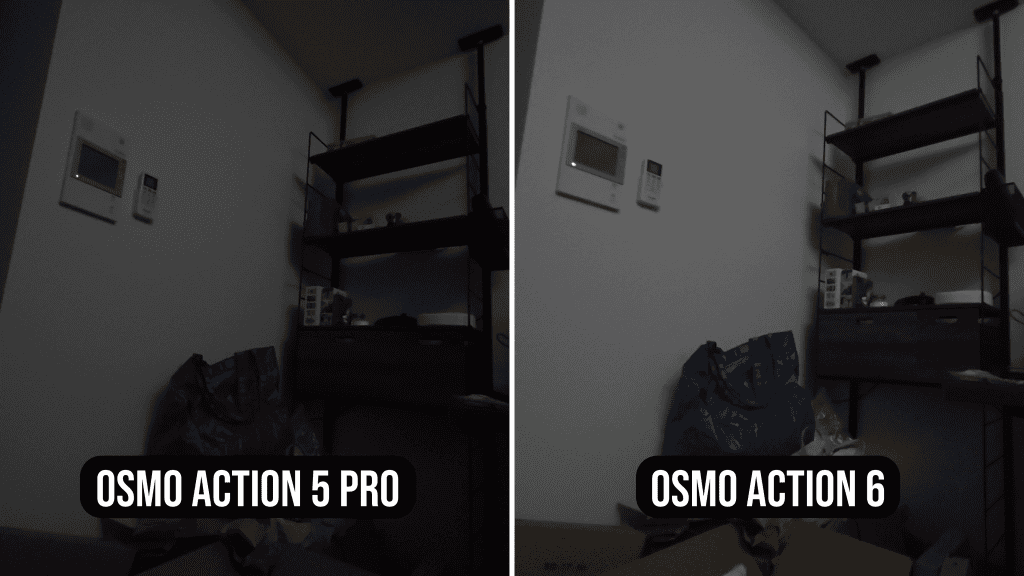
One important caveat is that when shooting at f2, the minimum focus distance increases significantly. Close-up objects can easily look soft or out of focus unless you are aware of it.
Your smartphone or the Osmo Pocket 3 will still outperform it in dark environments, but the Osmo Action 6 does offer the best low-light performance we have seen from a DJI action camera so far. Personally, I am looking forward to shooting more nighttime bike footage with it compared to the Action 5 Pro I have been using.
Depth of Field
If you were hoping for cinematic background blur, you will not find it here. Action cameras simply have sensors that are too small and lenses that are too wide for real subject separation.
What does change is foreground focus. By stopping down to f4, the Osmo Action 6 can focus as close as 20 cm. That is a noticeable improvement compared to the roughly 35 cm minimum focus distance you get at f2.8 on the Action 5 Pro and the Action 6 itself.
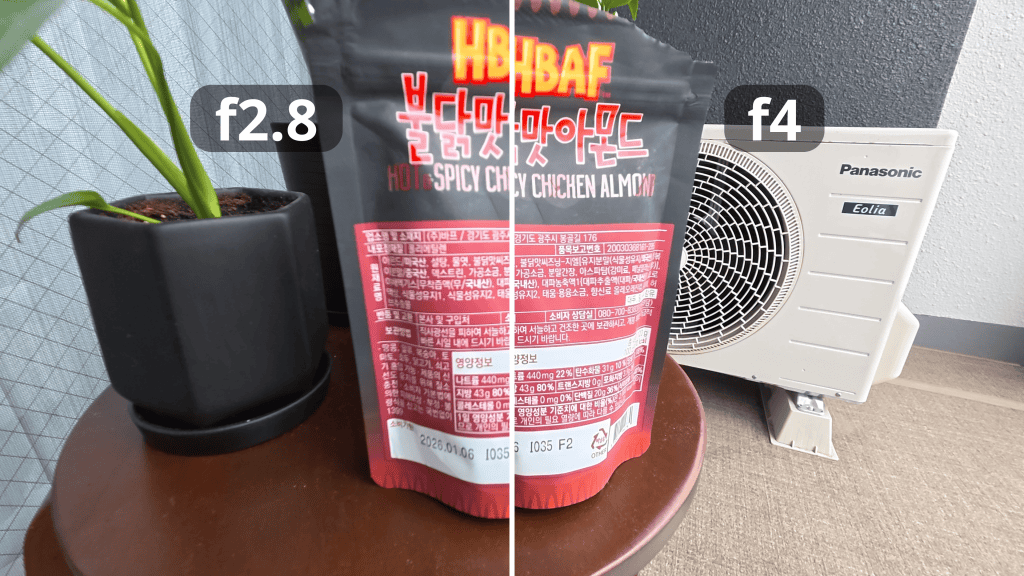
For POV shooting, this is genuinely useful. It makes it much easier to keep things like a phone screen or small objects in focus.
The catch is that the camera will not automatically stop down to help with close focusing. You have to remember to manually switch to f4 when you need it.
More Exposure Control
Variable aperture also gives you an extra stop of exposure control. Stopping down effectively acts like a built-in one-stop ND filter compared to f2.8.
This gives you a bit more freedom to slow down your shutter speed without overexposing the image, which helps introduce some natural motion blur.
You will still need real ND filters if you want anything close to the 180-degree rule, but aperture control makes the camera more flexible overall. In practice, you may find yourself swapping ND filters less often.
Starburst Effect
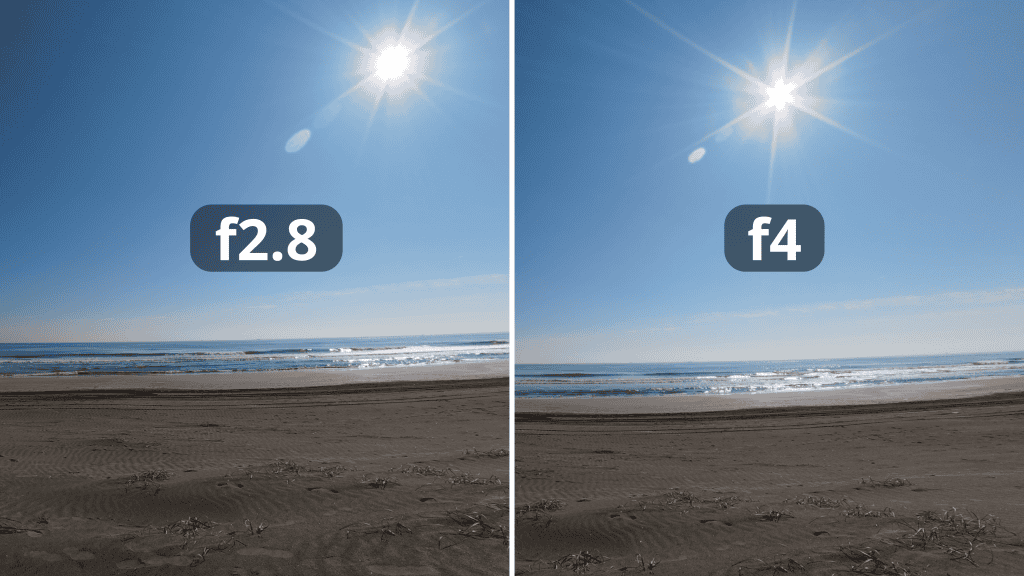
Stopping down also creates a starburst effect around bright light sources. This is not a reason to buy the camera, but it is a fun creative option that can add character to certain shots if you enjoy playing with light.
Other Noteworthy Changes
Beyond the sensor and aperture, there are a few other updates worth mentioning.
DJI introduced a new macro lens accessory that allows you to focus as close as 11 cm. The footage looks impressive, but because it uses manual focus, it feels impractical on a small action camera screen. Considering the price and the uncertainty of future compatibility, it is hard to justify for most users.
There is also a welcome quality-of-life improvement with the new bidirectional magnetic mount. You can now attach the camera in either direction, which solves a surprisingly common annoyance from previous models. The Action 6 remains backward compatible with older mounts, though they do not offer the same magnetic guidance and feel a bit fiddlier.
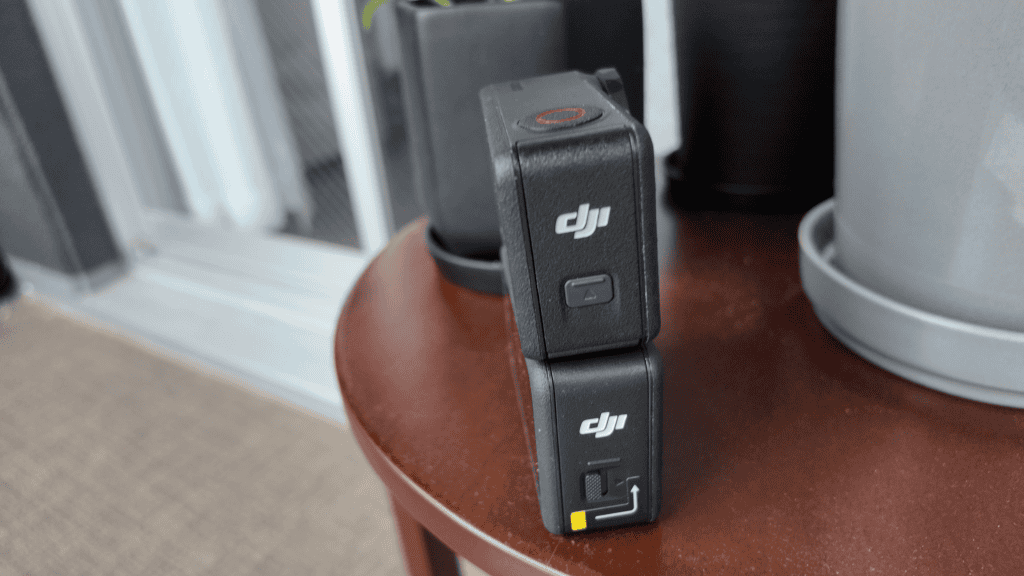
Finally, DJI redesigned the battery and USB door. Instead of sliding straight down, you now push the latch sideways before pulling it open. It is a small change, but the compartments feel more secure.
Verdict
The DJI Osmo Action 6 is an interesting camera. DJI made meaningful changes under the hood, but for most people, the final image is similar to the Action 5 Pro. The biggest upgrades are about expanding capabilities rather than delivering a dramatic jump in image quality.
That makes the buying decision fairly simple. If you are a multi-platform creator who needs both horizontal and vertical video from the same footage, the square sensor and reframing flexibility are genuinely valuable and may justify the upgrade on their own.
For everyone else, it is a much harder sell. You are getting the best low-light performance DJI has delivered in an action camera so far, along with a few quality-of-life improvements, but for most users, that will not be enough to warrant replacing a perfectly good Action 5 Pro.
More broadly, this camera highlights where the action camera market is right now. Manufacturers are sticking to yearly release cycles, but the form factor itself is approaching its practical limits. It will be interesting to see where things go from here.