
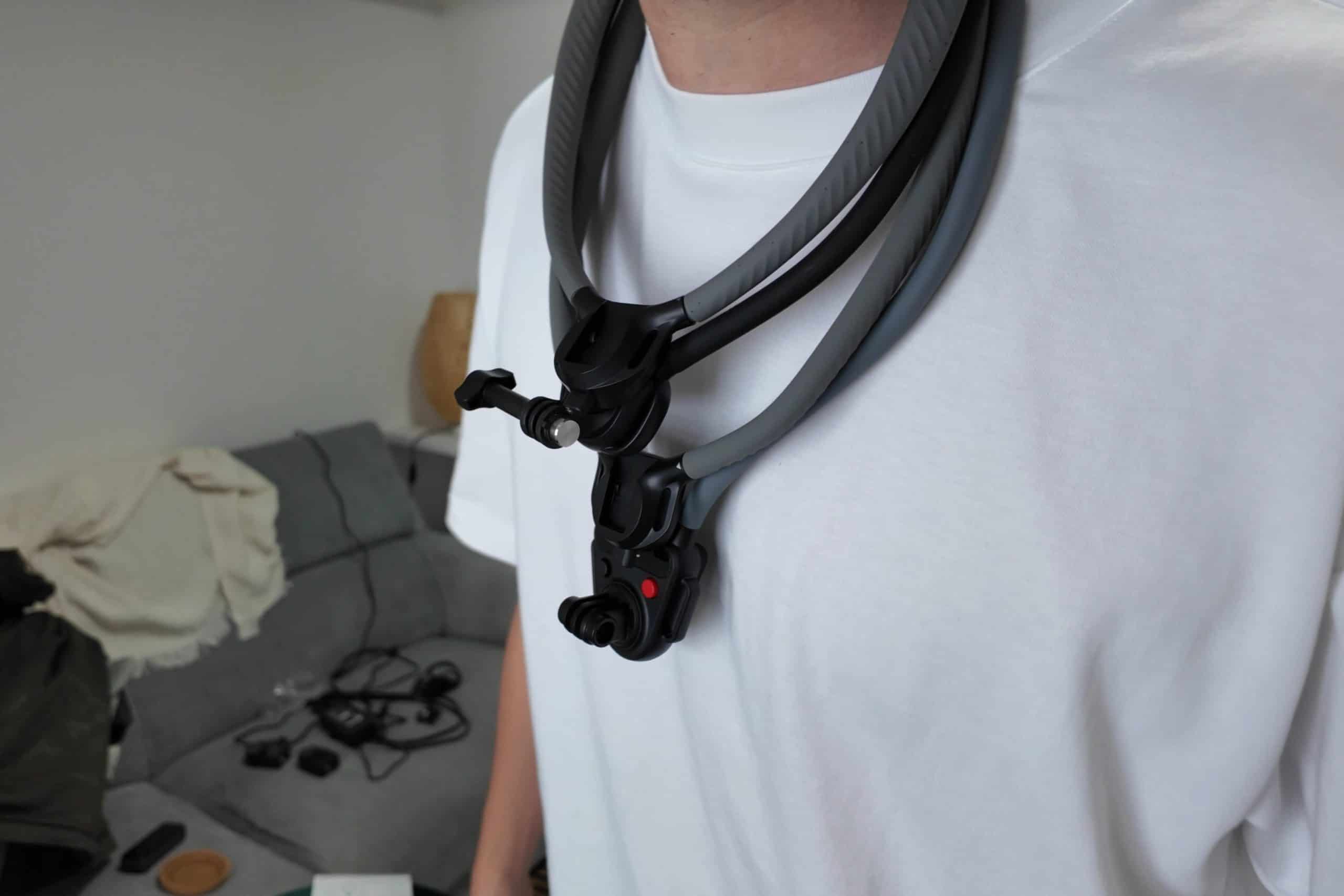
For POV footage, neck mounts hit a really useful middle ground. They get rid of the hassle of strapping into a chest mount, and they feel a lot less awkward than wearing a camera on your head. That’s why they’ve quietly become one of my most-used camera accessories.
I use them constantly for things like POV unboxings, hands-on demonstrations, product reviews with my DJI Osmo Pocket 3 and 4, and biking footage with my action and 360 cameras. Basically any time I want a first-person perspective without having to think about holding a camera.
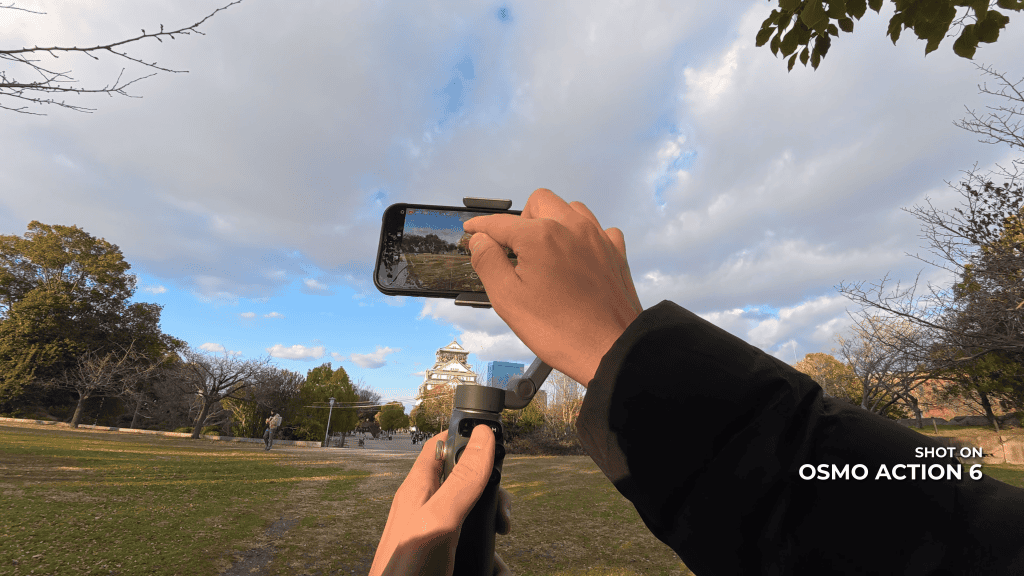
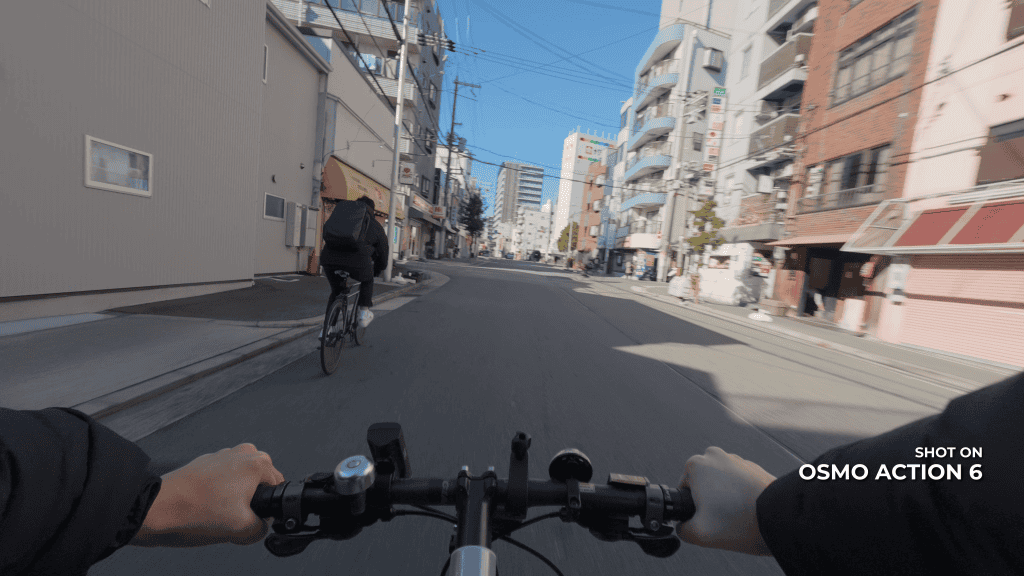
Over the past couple of years I’ve worked my way through a bunch of these things, and I’ve reviewed several of them on the channel. So instead of making you watch all of those, I’m putting my findings into this post.
This is my take on the best neck mount you can buy right now, plus two alternatives that, depending on how you shoot, might actually be the better pick for you.
But before I get into the specific products, I need to explain the two neck mount features I consider non-negotiable. Everything else flows from this.
The two non-negotiables
If you take nothing else from this post, take this: a good neck mount needs a quick-release system and the ability to use a stabilizing strap. The frustrating thing is that most neck mounts on the market only include one or the other.
1. A quick-release system
A quick release makes it much easier to get your camera on and off the strap. This is especially clutch when you’re running a camera that doesn’t have its own dedicated quick-release plate — for example the DJI Osmo Pocket 3 in its expansion adapter, or the Insta360 X5 on its 1/4-inch thread. Without a quick release at the neck mount itself, taking the camera on and off becomes a chore, because you’re manually screwing and unscrewing it every single time.
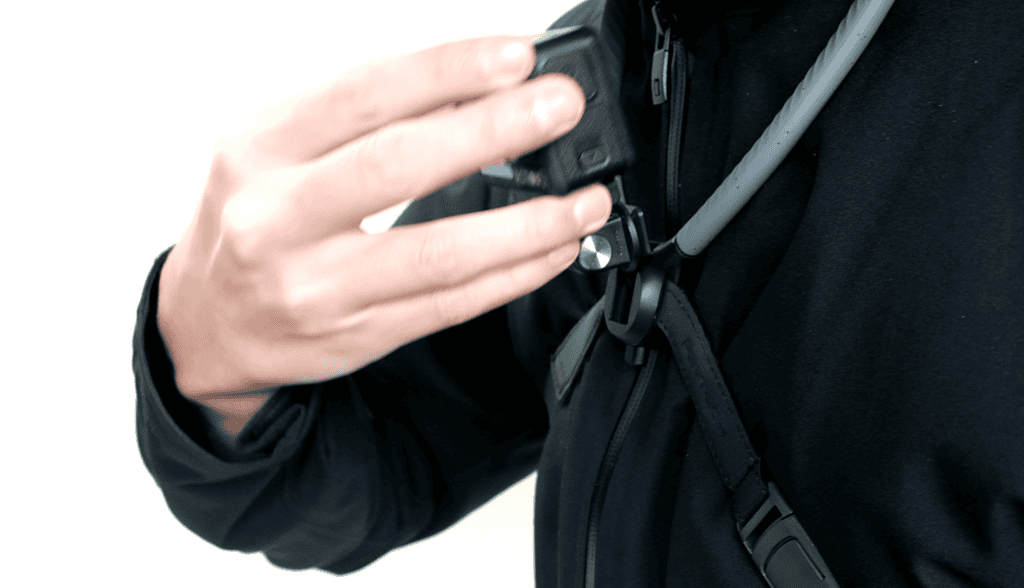
And even if your camera does have its own quick-release system, a quick release at the neck-mount level is still worth having. It lets you invert the camera much faster, and when you take the camera off you’re left with far less bulk — you’re not stuck with a plate and an action-camera mount dangling off the bottom.
2. A stabilizing strap
For basic hands-on shots or demos, you don’t really need a strap. The cord is usually rigid enough and gravity does the work. But the moment you do anything moderately intense — biking, jogging, generally moving around a lot — a strap becomes essential. It keeps the mount stable and stops the camera bouncing all over the place.
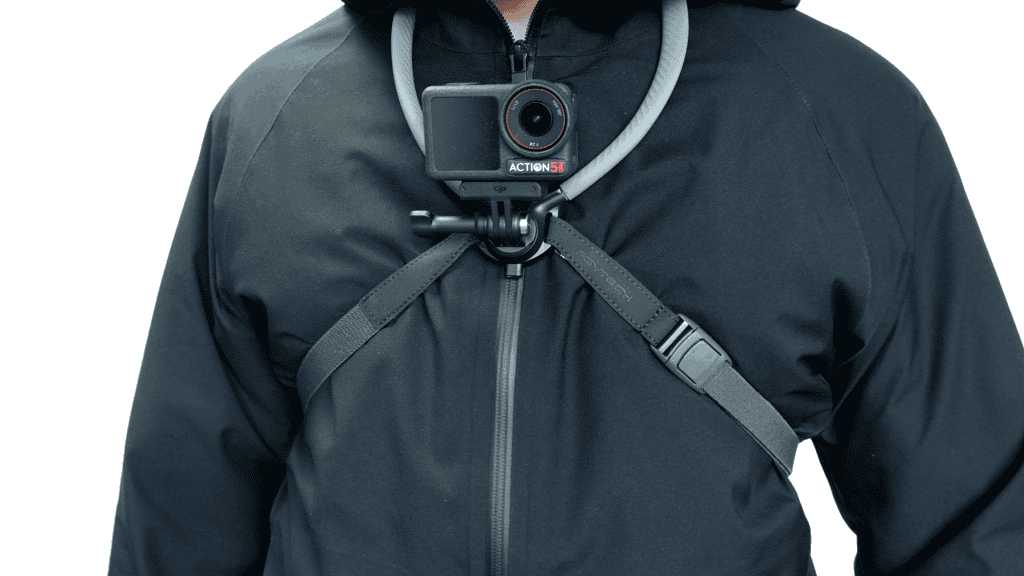
Once you start judging neck mounts by these two criteria, most of them fall away immediately. And that’s exactly why my top pick has held the spot for so long.
Best overall: PGYTech CapLock Neck Mount (MAX version)
The No products found. has been my go-to for a long time, for one simple reason: it nails both non-negotiables when almost nothing else does. But before I tell you which version to actually buy, let me explain why I rate the CapLock system itself.
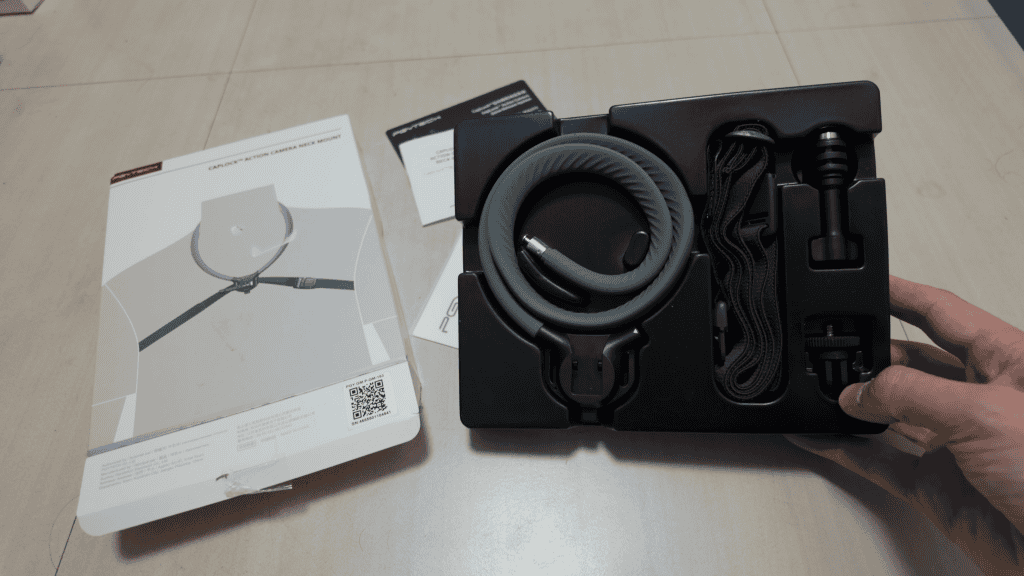
The quick release is the best I’ve used. The CapLock plate slides in and out, and I find that more intuitive and more refined than the twist-to-lock mechanisms on a lot of competing systems. It’s also leaner and lower-profile than rival quick releases from brands like Ulanzi or Telesin, so it doesn’t stick out as much and takes up less room in a bag.
The strap system is genuinely well thought out. It’s elasticated, and because it splits into two and uses a clip, you can take it on and off quickly. You’re not threading a strap through a loop every time you want to secure or release it — a small thing, but it adds up fast in real-world use.
It’s device-agnostic, with a proper ecosystem behind it. The CapLock plate isn’t tied to one camera, so I can run the same quick-release system across my phone, my Pocket, and my action camera. And PGYTech makes a sensible range of CapLock accessories — handlebar mounts, helmet mounts, mini tripods — which means I can pop the camera off the neck mount and straight onto my bike without buying a separate adapter for every mounting point. That alone has saved me a lot of money and faff.
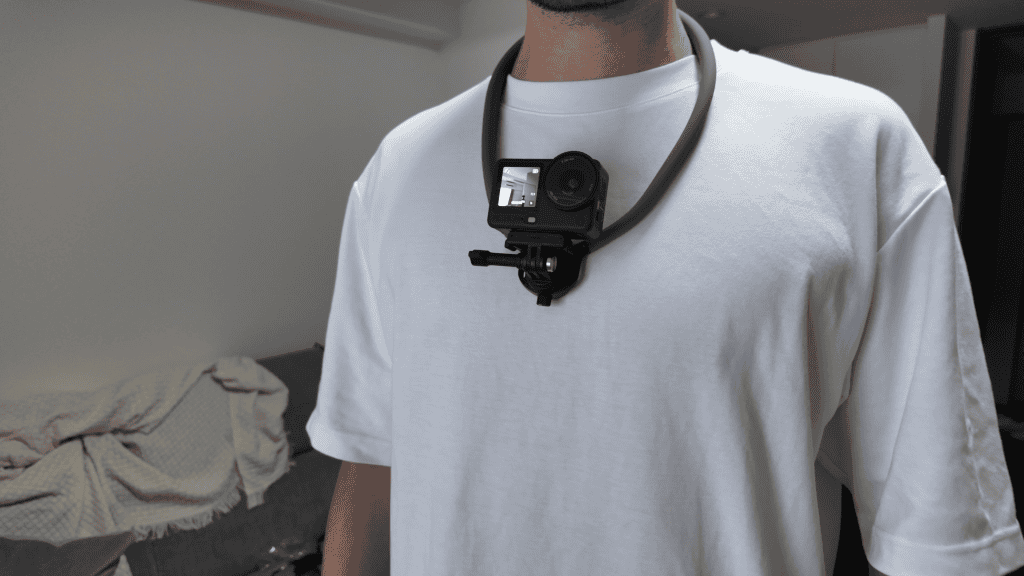
And it’s just nice to wear. It’s light, low-profile, and honestly looks pretty good, so I’m happy to leave it around my neck even when I’m not actively filming.
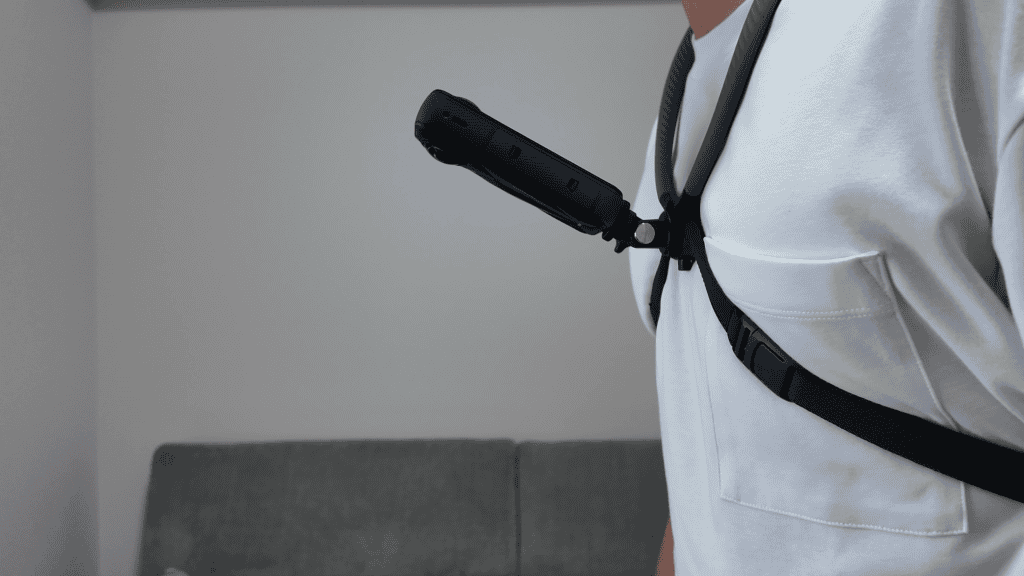
So why the MAX, and not the standard?
Here’s the one complaint I’ve seen come up on multiple occasions about the No products found., both in Amazon reviews and in the comments section of my videos: the cord is on the short side.
Because the cord isn’t very long, when you mount a camera upright it can end up sitting close to your chin (especially with a taller camera like the Pocket 3 or 4, or the Insta360 X5). You can work around it by flipping the camera upside down, which is what I do when I need to, but that doesn’t fix the underlying issue. And if you’ve got a larger build, or you’re wearing the mount over a jacket, that shorter cord can simply be too tight.
For me personally, the sizing of the standard version was never a real problem. But PGYTech now makes a larger MAX version of the exact same mount, designed for larger builds or for wearing over winter layers. You keep everything that makes the CapLock great, like the slide-in quick release, the button placement, and the elasticated split strap, but with more room.
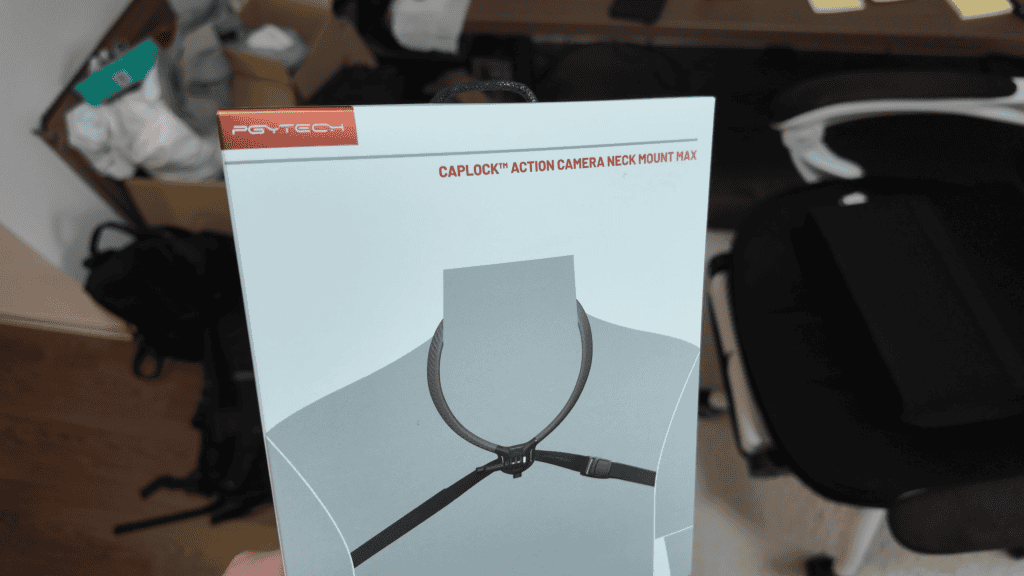
So my recommendation breaks down like this:
- Get the standard CapLock if you’ve got an average or thin build, and want the smallest, lightest, most discreet option to leave around your neck.
- Get the MAX otherwise
Either way, the CapLock is the one I keep coming back to. It’s the best all-rounder, and for most people it’s the right answer.
That said, it isn’t the right answer for everyone. So here are the two alternatives worth knowing about.
Alternative 1: JJC Neck Mount — for maximum reach and larger fits
The No products found. is one of the very few mounts that also checks both non-negotiable boxes — quick release and strap — but it does so with a significantly longer cord than the PGYTech or most other options out there.
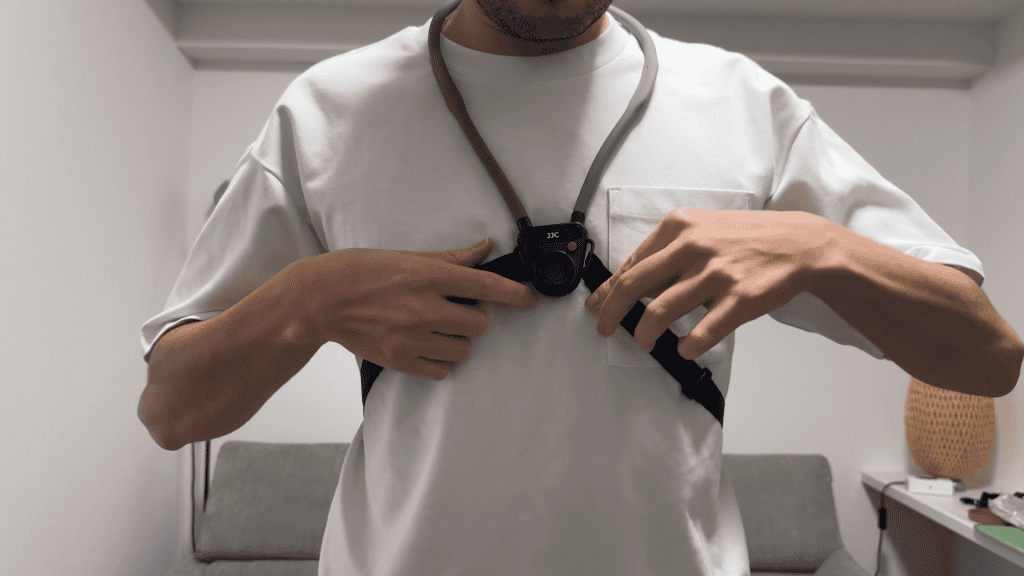
That extra length brings a few real advantages:
- Better fit for larger builds and over jackets. If the PGYTech feels too tight, this solves it directly while keeping the features that actually matter.
- Better screen visibility for top-down POV. With an action or 360 camera angled down, the extra distance from your head means you don’t have to crane your neck as much to see the screen.
- A slightly lower biking angle. Because the camera sits a bit lower on your chest, you get framing that’s closer to a chest mount and nearer the ground. It’s subtle and very much a personal-preference thing, but some people will prefer it.
- A padded cushion on the back, which the PGYTech doesn’t have. If you’re wearing the mount for long stretches, that’s a nice comfort bump.
So is the JJC better than the PGYTech? Honestly, it depends. If the PGYTech MAX still feels too small or too tight for you, the JJC is the better mount, full stop. It fixes the sizing issue without giving up the essentials.
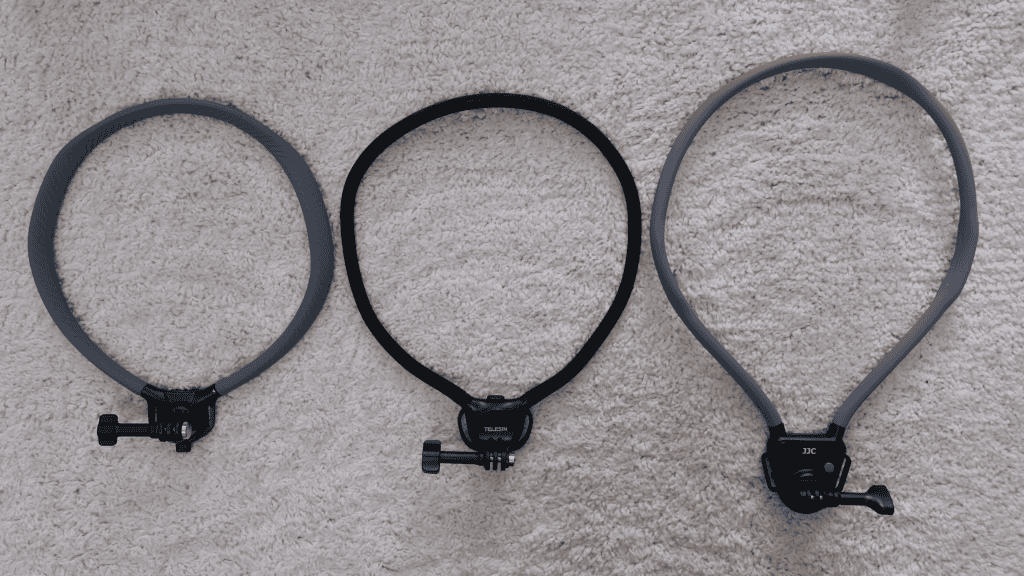
But if sizing isn’t a problem for you, the decision gets harder, because there are still a few things I prefer about the PGYTech. Its smaller, lower-profile design is nicer to leave around your neck. I prefer PGYTech’s clip-based elasticated strap to threading the JJC’s strap through a loop. And with my Osmo Action 6 mounted upright on the JJC, the cord-lock and quick-release buttons can get slightly obstructed by the camera. Plus, I still find the CapLock’s slide-in release more intuitive than the JJC’s twist-to-lock.
One thing to flag if you’re weighing the JJC against the PGYTech MAX specifically: the MAX is still smaller than the JJC. So if absolute maximum cord length is your top priority, the JJC wins. If you just wanted the standard PGYTech with a bit more room, the MAX is the cleaner middle ground.
Alternative 2: K&F Magnetic Neck Mount — for clean, comfortable, portable upright POV
Magnetic-type neck mounts have been getting more and more popular, so I picked up No products found. to find out whether they’re actually an improvement or whether the trade-offs are too hard to ignore. The base plate goes underneath your shirt, and the camera plate clamps onto it from the outside through the fabric.
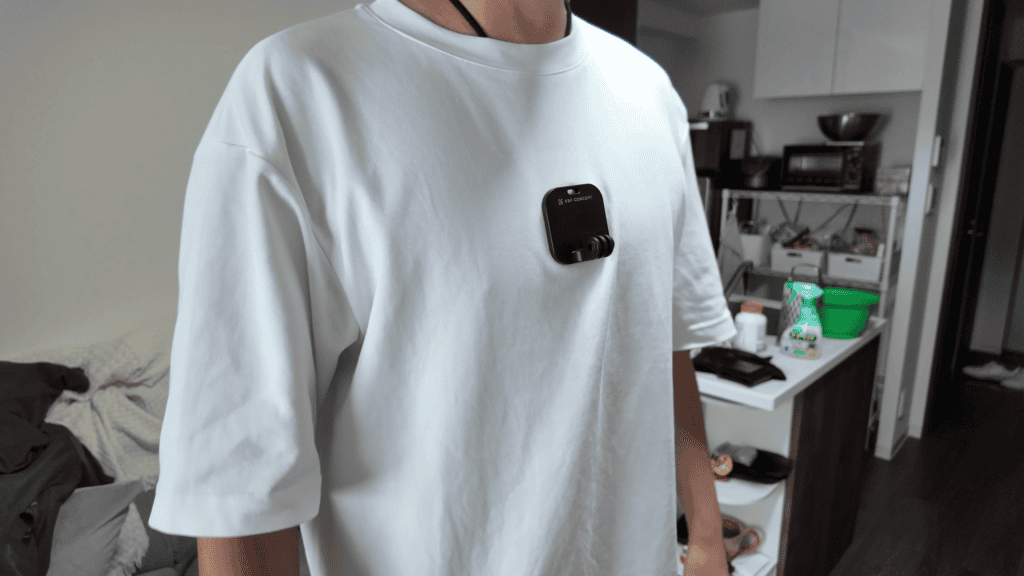
Before anything else, I needed to answer one question: can the magnet actually hold a camera reliably? Because if it can’t, nothing else matters.
The short answer is that the magnet is seriously strong. It’s an N52 magnet (and the strongest magnet I’ve ever used) and snapping the plates together makes a sound almost like a gunshot. It comfortably held the weight of an Osmo Action 6 plus my mirrorless camera. So raw holding power is not the problem.
But there are two big caveats, and they’re the whole story with this mount.
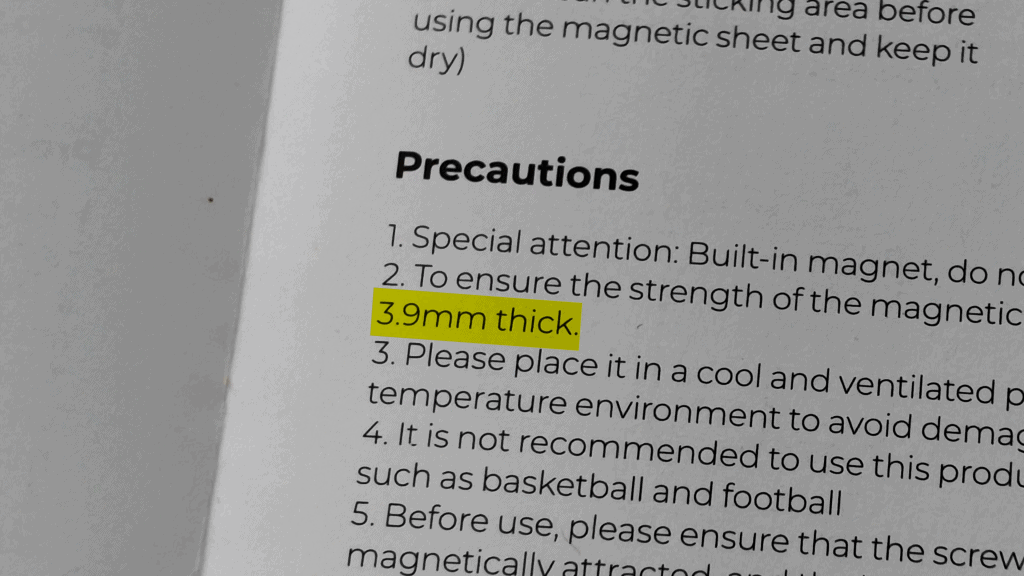
Caveat one: distance. Because there’s always a layer of fabric between the two magnets, and magnetic strength drops off quickly with distance, the clothing you wear matters a lot. A normal T-shirt or sweater is generally fine. Thicker layers, or anything with a zip, quickly become a problem. The manual rates it for clothing up to 3.9mm thick, which means your wardrobe freedom is far more limited than with a traditional neck mount you can throw on over basically anything.
Caveat two: stability. There’s no rigid lanyard structure resisting movement, so the camera can wiggle and sway depending on your clothing and body angle. For normal upright walking, I didn’t find this an issue. But for biking it definitely was — with my chest angled forward and a loose T-shirt, the camera was essentially floating on the fabric, and the framing visibly drifted around. A tight base layer helps, but even then I wouldn’t trust it with heavier cameras or high-leverage setups, like a long Insta360 X5 or a Pocket on an extension arm. Those pull on the fabric too much and can genuinely stretch out your shirt.
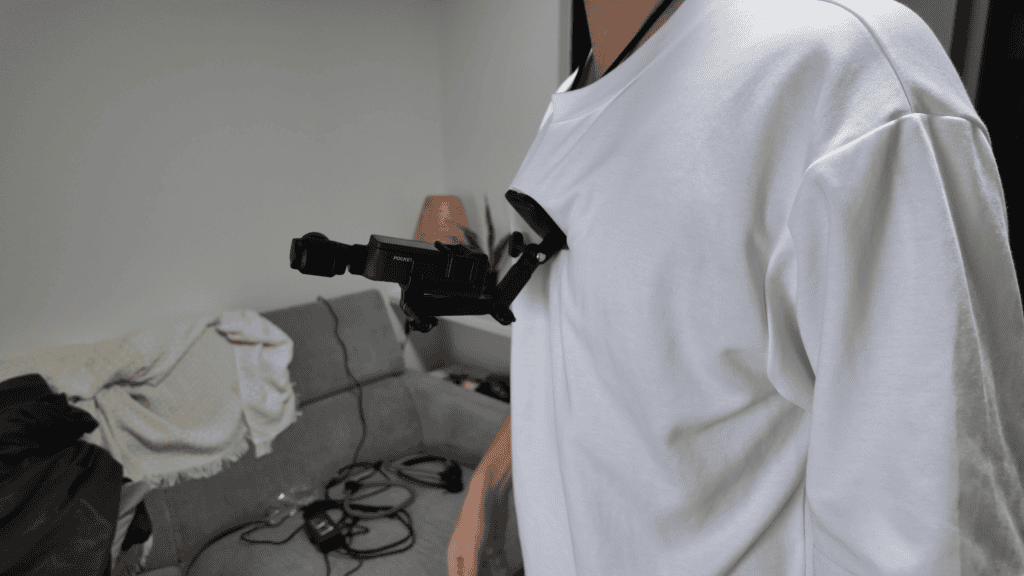
So the magnet isn’t the weak point — it’s whether your clothing and camera setup give the mount enough support.
When the conditions are right, though, the magnetic design has real advantages a traditional mount can’t match:
- It looks the cleanest by far. When worn, the only thing showing is the camera. Take the camera off and the mount is basically invisible.
- It’s the most comfortable, especially in heat. The weight is spread across your upper body through the shirt rather than concentrated on the back of your neck, and there’s no thick lanyard sitting against your skin. In hot, sweaty weather that’s a noticeable upgrade.
- It’s the most portable. The whole thing fits in your pocket. A traditional mount is compact too, but this is in a smaller size class.
- Small bonus: the front plate snaps onto any magnetic or iron surface, and the box includes adhesive magnetic sheets, so you can stick the camera somewhere to film yourself from a distance. I wouldn’t buy it for this, but it’s a nice extra.
So will it replace my go-to POV setup? For me, no. But not because it’s a bad product. It just doesn’t suit how I personally shoot. My demos and reviews usually run a Pocket on an extension arm, which is exactly the kind of heavy, high-leverage setup the magnet struggles with, and since those are short clips filmed at home, the comfort, style, and portability barely come into play. For biking, I’ll stick with the PGYTech and its strap for stable footage I don’t have to think about.
But if you mainly record upright with a lightweight action camera, in thinner clothing, the K&F magnetic mount could absolutely be the better choice for you. In the right conditions it’s cleaner, more comfortable, and more portable than anything else here. It’s a situational alternative rather than a universal upgrade.
How to choose
| If you want… | Go with… |
|---|---|
| The best all-rounder that does everything well | No products found. |
| Maximum cord length for most breathing room | No products found. |
| The cleanest, most comfortable, most portable option for upright POV in thin clothing | No products found. |
The verdict
For most people, most of the time, the PGYTech CapLock neck mount is the one to buy. I’d say the MAX version is my default recommendation since it keeps everything I like about the CapLock system while solving the only real complaint about the standard model. It’s the rare mount that includes both of the features that actually matter, and the ecosystem around it makes it the most flexible option by a clear margin.
But the whole reason I tested all of these is that the “best” mount genuinely depends on how you shoot. If you need more length or run a larger build, the JJC is the better fit. And if you mostly film upright with a light action camera in thin clothing, the K&F magnetic mount might give you a cleaner, comfier setup than any traditional mount can.
If there’s a neck mount you swear by that I haven’t covered here, let me know and I’ll check it out.